Municipal CIPP: specifications, testing and the paperwork that closes the job
A municipal lining contract is won or lost in the specification. This page covers what the document has to establish before bid, what acceptance should require, and how a program decides which lines get lined first.
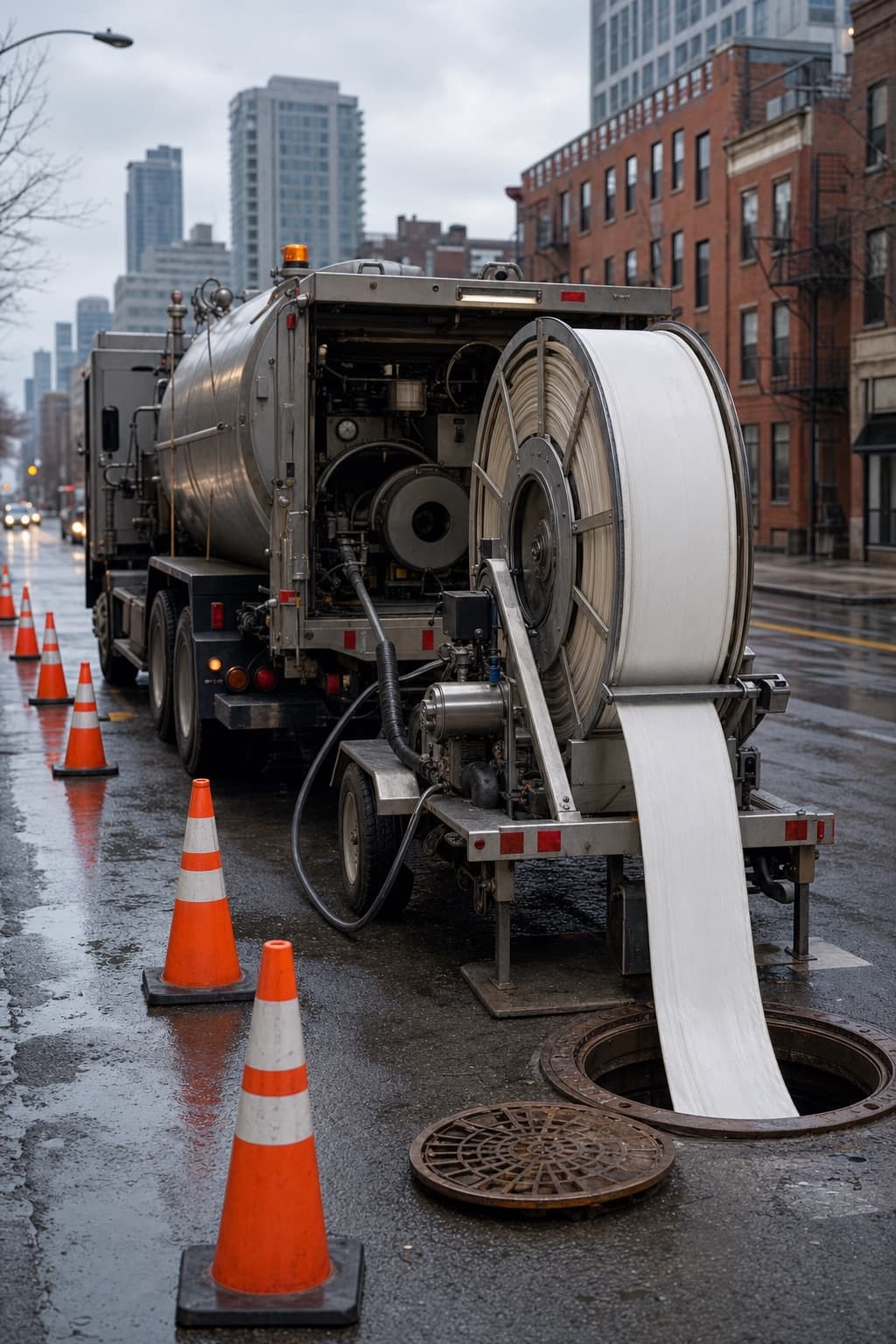
Condition data comes before scope
A rehabilitation program built on anecdote, the streets that flood, the addresses that call, treats symptoms wherever they are loudest. A program built on coded condition data treats the pipes most likely to fail.
That means surveys with standardized defect coding, severity grading and positions, covering enough of the network to rank it. What such a survey has to contain is set out on inspection and assessment; here it is the input to a bid document rather than to a single repair.
What the specification has to settle
Ambiguity in these six areas is where change orders come from. Each is a paragraph in the document and a dispute if it is missing.
- The design basis: which lines are treated as partially deteriorated and which as fully deteriorated, and who determines that.
- The standards the installation is to comply with, cited by number and edition.
- Cleaning: to what condition, verified how, and priced how if the line is worse than the survey indicated.
- Bypass and flow control: whose scope, and what continuity of service is required.
- Lateral reinstatement: how connections are located, how they are reopened, and the tolerance for the cut.
- Acceptance: what tests, what documentation, and what happens when something fails.
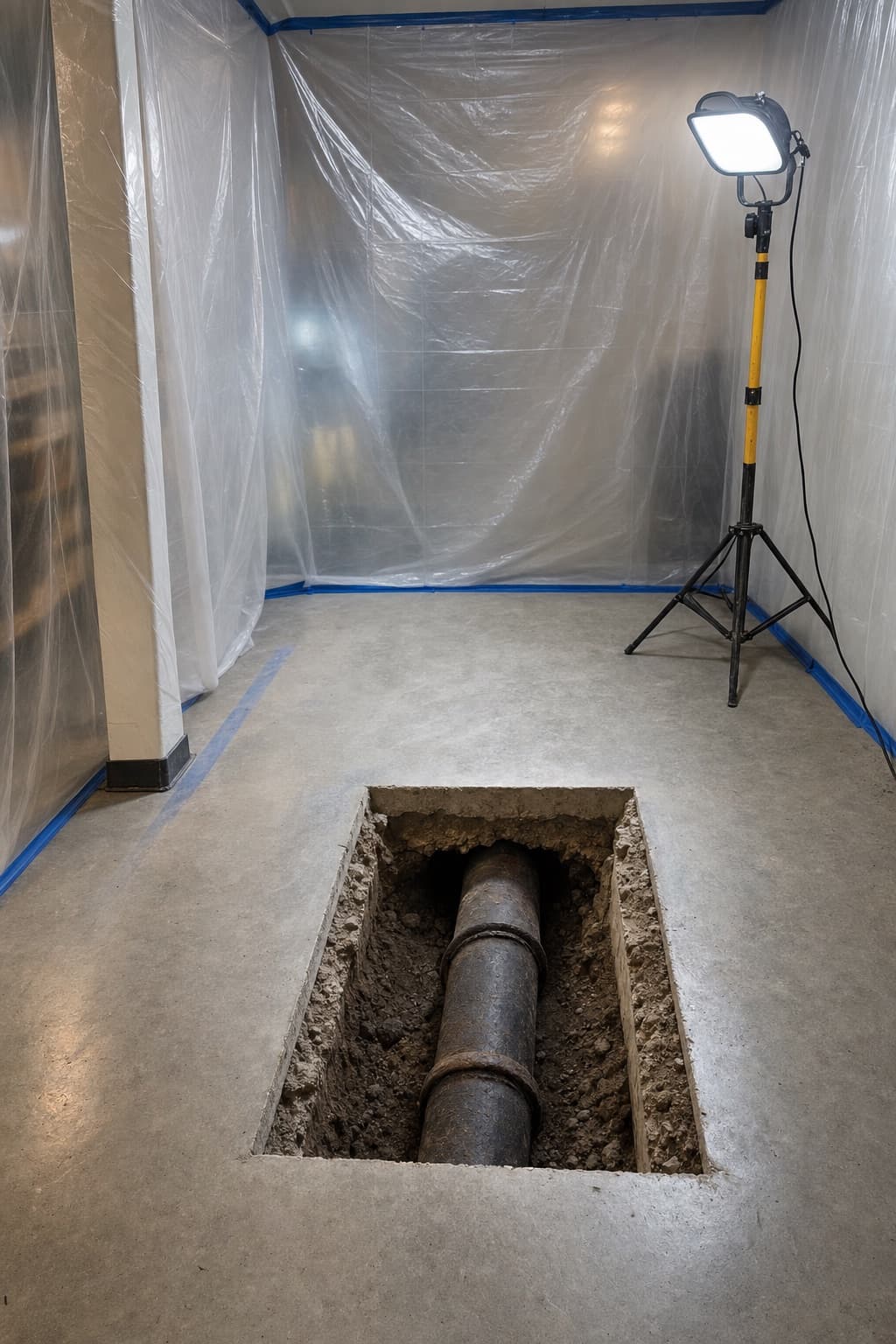
Acceptance, and what proves it
The finished work is inside a pipe nobody will look at again for years. Acceptance is therefore the only moment where the specification is enforceable at reasonable cost.
- Post-installation survey of the full lined length, after reinstatement, reviewed by someone who reads the coding.
- Leak testing where specified, with the method, pressure and duration named in the document rather than agreed on site.
- Physical samples, prepared as the standard requires and tested for the properties the design assumed.
- Cure records: the profile achieved, not the profile intended.
- Confirmation that every connection on the run was reinstated, checked against the pre-installation list.
The public-facing part
Municipal lining work happens in front of residents, and most complaints are about things nobody warned them of rather than about the work itself.
- Odor during and after the cure, which can enter homes through dry traps, advance notice and a plain explanation of what to do prevents most of it.
- Driveway and street access during the work, and where equipment will stand.
- Water use restrictions while a section is out of service, communicated by address and time window.
- Where discharge from cleaning and curing goes, which is both a permit matter and a question residents ask.
Choosing what to line first
Two approaches compete in most programs. Worst-first, line the pipes in the poorest condition, is intuitive and defensible in public. Risk-based, weight condition by the consequence of failure, treats a poor pipe under a hospital access road differently from an equally poor pipe under a field.
Neither is automatically correct, and the choice belongs to the agency rather than the contractor. What matters technically is that whichever ranking is used, it is applied to coded condition data rather than to complaint volume.
The second programmatic decision is batching. Lining is cheaper per foot in a program than in a one-off, because mobilization, bypass planning and traffic control are spread across more work. That argues for grouping lines geographically, and against emergency-only procurement.
Frequently asked
How long should a specification allow between survey and lining?
Long enough for the design and the bid, short enough that the condition data still describes the pipe. Where a survey is more than a season or two old on a deteriorating line, a verification run before installation is cheap relative to what it prevents.
Should the agency specify a product or a performance?
Specifying performance and the standards to be met keeps competition open; specifying a single product narrows the field and can raise the price. Either way, the acceptance criteria are what make the specification enforceable.
Who reviews the post-installation video?
Somebody who reads the coding and was not on the crew. A review carried out by the party being paid on the result of it is not a review, it is a formality with a video attached.
Last reviewed July 29, 2026.
Discuss the program, not a single line
Network extent, condition data available, standards in force and the constraints of the streets involved. Specialists who work for agencies price programs differently from one-off repairs.
CIPP Connect rehabilitates pipe in place: camera inspection and assessment, cleaning, cured-in-place liner installation, lateral reinstatement and post-installation verification. One crew, one written scope.