Commercial pipe lining: the pipe is the easy part, the building is not
In an occupied building, the pipe is rarely the hard part. The hard part is doing the work without closing the restaurant, emptying the floor or interrupting the hotel, and that is a scheduling problem before it is a technical one.
Why lining is attractive in a building, and where the attraction ends
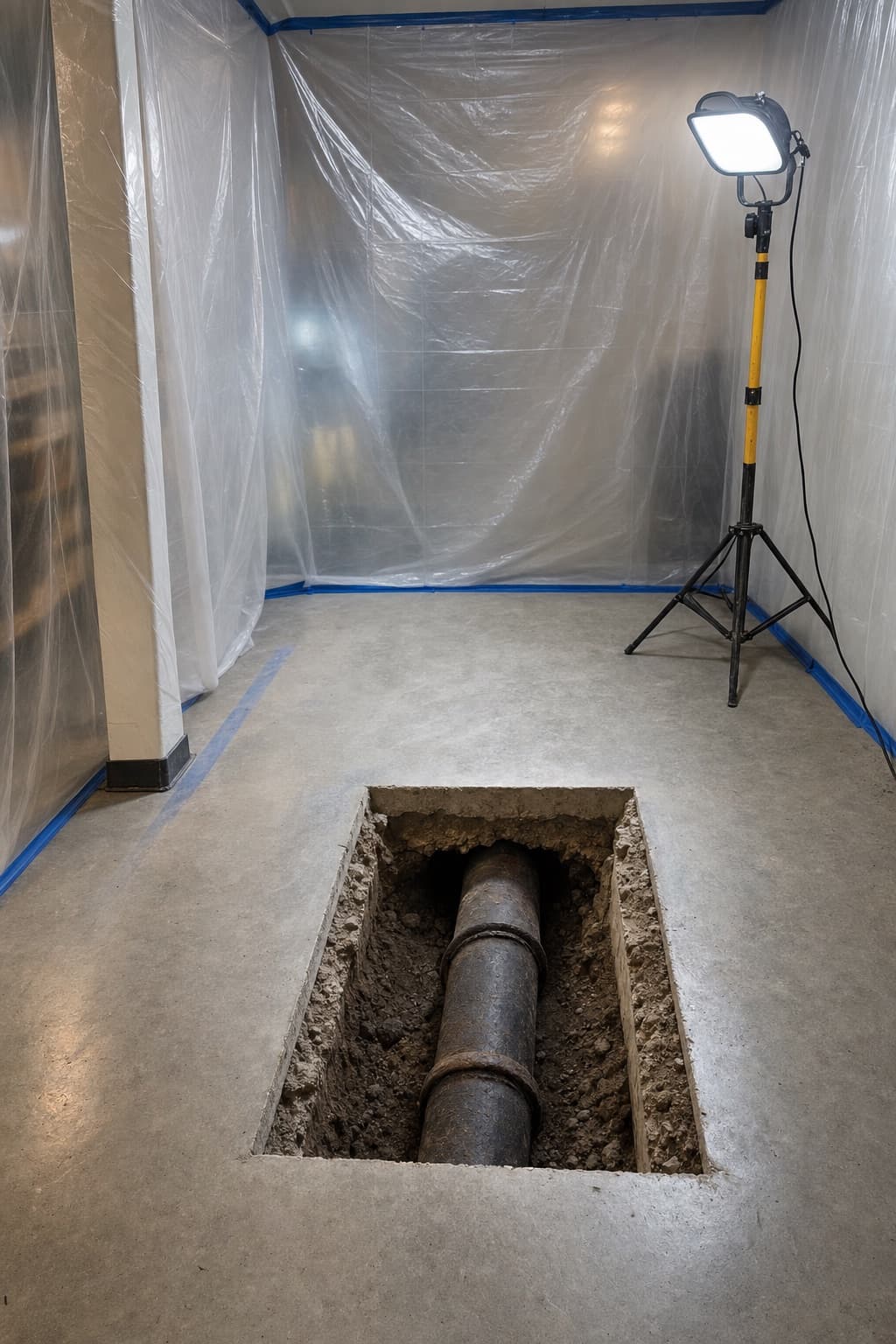
Under a commercial building, replacing a drain means breaking a slab, working inside an occupied space, and putting back a finished floor. The pipe work is a fraction of that cost, and the disruption is often the largest item of all, the days the space cannot be used.
Lining changes that calculation. The ground stays closed, the finishes stay where they are, and the work happens through existing access points. This is the setting where the trenchless argument is strongest.
It ends at the same place it always ends. A drain with a sag under the slab still has a sag after lining, and a collapsed section still needs opening. The four questions on lining or replacement apply here exactly as they do outdoors.
The building types where this comes up
- Mid-century commercial and multifamily buildings with original cast iron, where corrosion and scale are the common finding rather than a single break.
- Hotels, where the drainage of a floor cannot go out of service during occupancy and the work is staged by riser and by wing.
- Restaurants and food service, where the line is grease-laden and cleaning is the significant part of the job.
- Retail and office, where the constraint is trading hours and tenant coordination rather than the pipe.
- Healthcare and education, where infection control, air quality and occupancy rules govern how and when anything is done.
Staging around occupancy
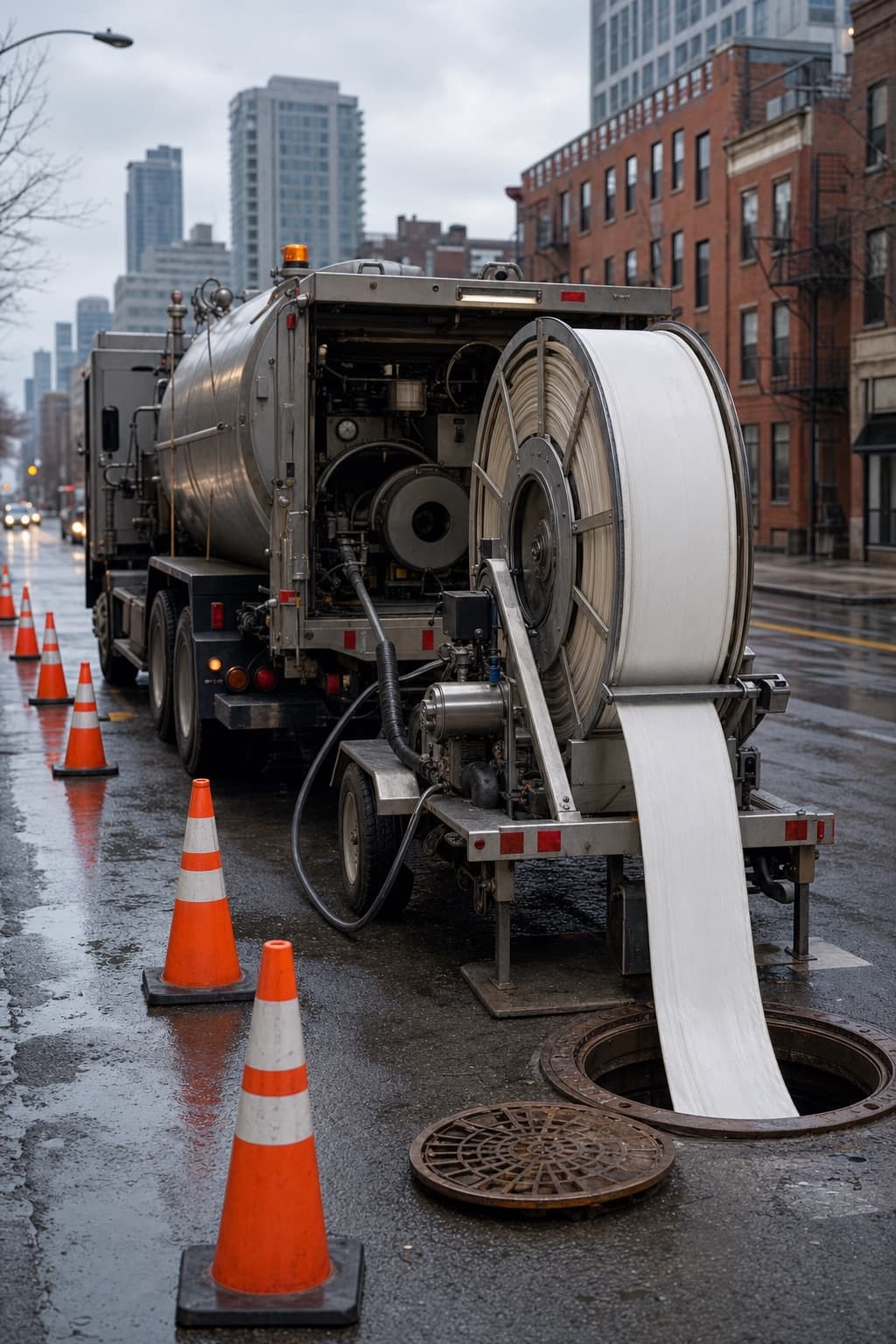
In practice a building project resolves into four scheduling questions, and they belong in the bid rather than in the first week on site.
- How is the drainage kept working while a section is out of service, bypass, temporary facilities, or work confined to closed hours?
- Which parts of the work generate noise, water or odor, and when are those permitted in this building?
- How is the run divided so that no single tenant loses service for more than a stated period?
- Who tells the occupants, how far in advance, and in what words?
The fourth is underrated. Notice given a day ahead in plain language prevents most of the complaints that a technically flawless job otherwise generates.
Odor, air and the things occupants notice
Styrene-based resin systems have a strong smell during and shortly after the cure. In a building it can travel through a dry trap, an open connection or a poorly sealed penetration and appear on a floor nobody is working on.
The usual controls are practical: fill dry traps before the work, cap or seal open connections, ventilate the working area, schedule the cure at the least sensitive time, and consider a styrene-free system where the building type makes odor unacceptable.
Vertical stacks and horizontal drains
Building drainage is not one system. Horizontal drains under the slab, horizontal branches at each floor, and vertical stacks connecting them each present different access, different installation constraints and sometimes different products.
A quote for “the drains” that does not say which of the three is included is not a quote for the building. Ask for the scope by section, with lengths and diameters, and for what happens at the junctions between them.
What belongs in the building file afterwards
A lined drain is invisible. In five years the property may have a different manager, a different contractor and a different owner, and the only thing that will tell them what was done is the file.
- Post-installation survey of every lined section, with distances.
- A drawing or schedule showing which runs were lined and which were not.
- The cure record and any test results.
- The warranty, with its exclusions.
- The pre-lining survey, kept alongside the rest, it is the baseline everything later is compared against.
Frequently asked
Can the building stay open during the work?
Usually, with the affected drainage staged and a bypass or temporary arrangement in place. What is scheduled around occupancy is not the whole project but specific stages , cleaning, installation and cure.
How disruptive is it compared with replacing the drain?
Substantially less in most buildings, because the slab and the finishes stay intact. The disruption that remains is noise, water, access to service areas and odor during the cure.
Is it suitable for a grease-laden restaurant line?
The lining itself can be, but the cleaning stage is doing the heavy work and should be priced honestly rather than as a token allowance. Ask what condition the cleaning price assumes, and what happens if the line is worse than that.
Last reviewed July 29, 2026.
Scope the building, not just the pipe
Building type, occupancy constraints, which runs are involved and what the survey showed. Specialists who work in occupied buildings price the staging as carefully as the liner.
CIPP Connect rehabilitates pipe in place: camera inspection and assessment, cleaning, cured-in-place liner installation, lateral reinstatement and post-installation verification. One crew, one written scope.